Electric vehicles (EVs) have shifted from niche curiosity to one of the most transformative forces in global transportation and energy. Wall Street firms — and in particular Morgan Stanley — have been at the forefront of analyzing this shift, offering detailed research and forecasts that influence investment and corporate strategy decisions across the automotive and technology sectors.
In this comprehensive guide, we explore what Morgan Stanley really says about EVs — including growth expectations, risks, competitive dynamics, stock implications, and the evolving narrative around electric cars in the global economy.
Broker Review Contents
A High Gear for EV
There has been a dramatic shift in the perception of automobile manufacturers in recent years. It wasn’t until recently that investors realised that the electric vehicle (EV) market was far larger than previously thought. There is now more value in Tesla than there is in the Big Three automakers put together. The move from internal combustion engines (ICE) to electric vehicles (EV) has been written off by investors as an expensive and risky venture. Morgan Stanley sees a once-in-a-lifetime revolution in automobile production, despite the fact that the process will take years and cost hundreds of billions of dollars. As a matter of fact, Morgan Stanley predicts that EV sales will overtake those of gasoline-powered vehicles by 2035. Jonas, whose team has overweight ratings on more than a dozen major manufacturers, believes that in the long term, EV adoption will be more cost-effective than continuing to use internal combustion engines. Improved economics of scale, cost savings from specialized EV platforms, greater regulatory backing and increasing customer demand for electric vehicles are just a few of the reasons to switch to electric vehicles.
As a result, the stock prices of most of the old-school automakers have plummeted. There is presently a sub-industry that is struggling inside the already struggling industrials sector, according to Jonas. Environmental, social, and governance (ESG) investors are increasingly interested in companies that can make the switch to electric vehicles (EVs), and this might lead to a considerable increase in the value of such companies’ stock prices. Instead of that, what are your options? CO2 emissions have the potential to significantly reduce the stock price-to-earnings multiples of corporations that do not address them.
Measuring True Progress
The Morgan Stanley team organized the world’s major automakers into four quadrants based on two fundamental metrics: revenue and market share. In addition to the real pace of change caused by the proportion of EV sales, current CO2 exposure. It is possible to sift out noise from market share and total vehicle growth or reductions by concentrating on accomplished EV penetration as a proportion of cars sold. While fleet sales might decline by around 60 percent in 2040, corporations with the most ambitious strategies could reduce CO2 emissions by more than 80 percent and at a time when demand for new vehicles is rapidly increasing. Assuming our forecast is true, Jonas expects to see years of protracted replacement demand that corresponds to around $25 trillion in replacement demand, and with traditional OEMs providing 90% of EV vehicles in the future.
| Global Autos Data – MSe | 2020 | 2025 | 2030 | 2040 | 2050 |
| Total Unit Sales (mm) | 73 | 84 | 85 | 100 | 108 |
| CAGR (%) | 2.9% | 0.2% | 1.6% | 0.7% | |
| Total Car Parc (mm) | 1,211 | 1,244 | 1,260 | 1,294 | 1,235 |
| EVs as % of Sales | 2.8% | 11.6% | 26.0% | 72.2% | 81.5% |
| EV Sales (mm) | 2 | 10 | 22 | 72 | 88 |
| EVs as % of Parc | 0.6% | 2.9% | 8.8% | 38.1% | 67.8% |
| EV Parc (mm) | 7 | 36 | 111 | 492 | 837 |
| ICE Miles (bn) | 11,838 | 12,669 | 13,237 | 10,794 | 7,192 |
| EV Miles (bn) | 57 | 353 | 1,342 | 8,649 | 21,369 |
| Total Miles (bn) | 11,895 | 13,022 | 14,579 | 19,443 | 28,561 |
| ICE mpg | 28.0 | 30.1 | 32.6 | 37.3 | 40.9 |
| EV Efficiency (Miles/KwH) | 3.00 | 4.00 | 5.00 | 6.00 | 7.00 |
| Total EV TwH | 19 | 88 | 268 | 1,441 | 3,053 |
| ICE Fuel Gallons (bn) | 423 | 421 | 406 | 290 | 176 |
| CO2 Emissions (Gt) | 3.8 | 3.8 | 3.6 | 2.6 | 1.6 |
(Source: Morgan Stanley Research)
1. Morgan Stanley’s Long-Term View: EV Revolution Is Real but Gradual
Morgan Stanley’s research team has framed the rise of EVs as part of a once-in-a-lifetime structural shift in the auto industry. The bank believes that EV adoption will eventually disrupt traditional internal combustion engine (ICE) dominance and force legacy automakers to reinvent themselves.
A. Secular Adoption of EVs
Morgan Stanley projects that electric vehicles will capture an increasing share of global auto sales over the long term as:
- Battery technologies improve
- Costs continue to fall
- Government policies increasingly favor low-emission vehicles
- Consumer awareness and environmental mandates rise
EVs could surpass ICE vehicles in sales by the mid-2030s, primarily driven by economics and regulatory pressure.
B. Legacy Automakers Have a Path but Must Act
Major established manufacturers, once slow to react, are beginning to pivot toward electrification. Analysts stress that investors should differentiate between companies aggressively reducing their CO₂ footprints and those lagging behind.
This long-term bullish backdrop remains a cornerstone of the bank’s EV thesis: electrification will dominate future automotive markets, but the path will be uneven and competitive.
2. Evolving Short- and Mid-Term Reality: EV “Winter” and Growth Slowdown
Despite long-term optimism, Morgan Stanley’s more recent research highlights a near-to-medium-term slowdown in EV adoption — a shift analysts describe as an “EV winter.”
A. What Is the EV Winter?
The term refers to a period of reduced EV sales growth, profitability pressures on EV makers, and slower adoption due to economic headwinds such as inflation, rising interest rates, and weakening consumer demand. Morgan Stanley forecasts:
- A near-term decline in U.S. EV volumes
- Battery-electric vehicle (BEV) penetration dropping to a smaller percentage of U.S. light-vehicle sales
- ICE and hybrid models regaining short-term share due to affordability advantages
This cautious view comes amid market realities like higher borrowing costs and slower consumer purchases, which have dented EV momentum relative to prior forecasts.
B. Implications for Automakers
Morgan Stanley uses this backdrop to adjust its auto sector analysis:
- Upgraded legacy players due to strong ICE/truck sales and execution
- Downgraded pure EV makers due to profitability concerns and slowing demand
- Re-rated leading EV companies to neutral weight, reflecting fair valuation after strong gains but weaker near-term volume expectations
This repositioning underscores a more nuanced investment thesis: EV growth still exists, but it won’t be a straight line upward — at least not in the next few years.
3. The China Factor: Who Wins the Global EV Race?
Morgan Stanley analysts also highlight geopolitical and regional competition as central to the EV narrative — especially the accelerating leadership of Chinese EV makers.
China Leading in EV Development
China is now seen as leading the EV race in production volumes, cost competitiveness, and market flexibility. Domestic leaders are advancing rapidly, while strong export potential and pricing advantages position Chinese manufacturers well against Western rivals.
EV Autonomy and Beyond
Analysts emphasize that autonomy and advanced technologies could become the next frontier in competition. For example, Tesla’s approach — focusing on self-driving systems without LIDAR — differs from competitors and may influence long-term differentiation.
4. Tesla and the Broader EV Ecosystem: Morgan Stanley’s Perspective
Morgan Stanley’s views on Tesla illustrate how the bank balances growth optimism with realism.
A. Valuation vs. Core EV Business
Tesla’s valuation is partially tied to technology ventures beyond vehicle sales — including autonomous driving, software, energy storage, and robotics. Analysts note that the EV car business alone accounts for a smaller share of total firm value.
B. Shift in Ratings and Expectations
With slowing EV sales growth and market headwinds, Morgan Stanley has adjusted its Tesla ratings. However, the firm remains optimistic about Tesla’s broader technology roadmap, including AI and robotics.
This dual view — cautious about pure EV volumes but positive on technology optionality — shows the bank’s multi-layered approach to evaluating EV companies.
5. Consumer and Market Dynamics: Sentiment Matters
Morgan Stanley’s research delves into consumer trends that could reshape EV demand. Surveys indicate that some potential buyers are prioritizing affordability and are delaying EV purchases, suggesting that consumer sentiment is not uniformly aligned with adoption forecasts.
6. EV Infrastructure and the Investment Landscape
Morgan Stanley recognizes the importance of related infrastructure and adjacent sectors:
- Coverage of EV charging companies highlights potential growth tied to electrification and charging partnerships
- Charging networks, battery technology innovators, and software platforms are potential beneficiaries even when vehicle sales face headwinds
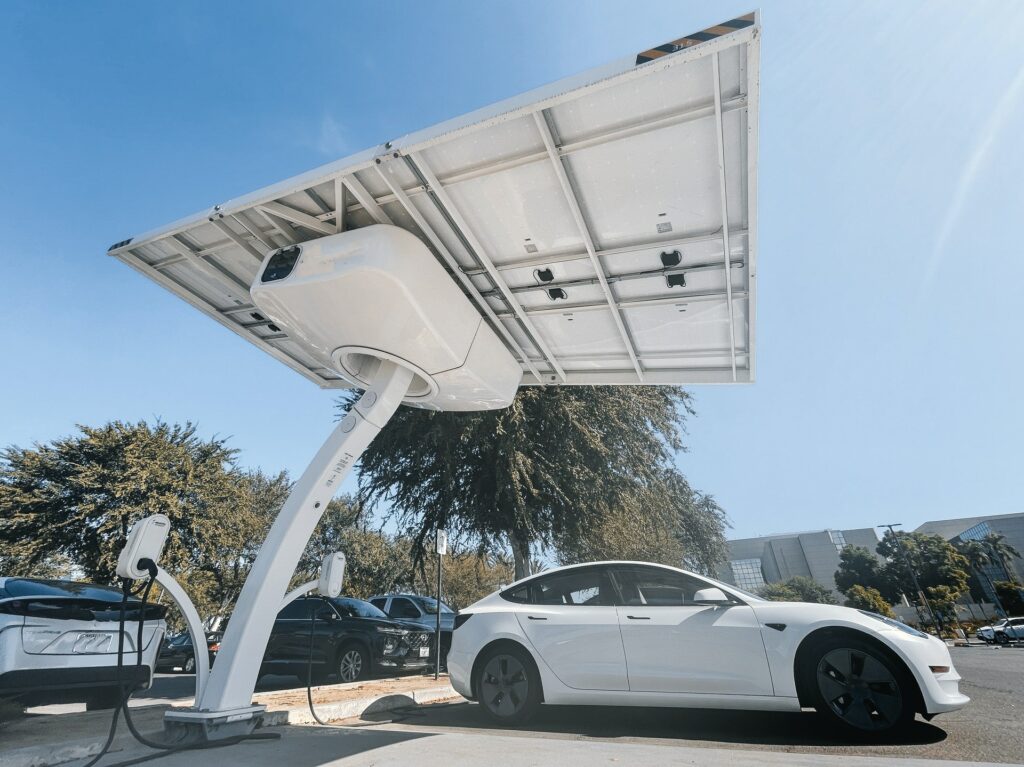
Infrastructure build-out — including charging stations, grid upgrades, and battery recycling — is essential to long-term adoption and electrification success.
7. Balancing Optimism and Risk: Key Takeaways from Morgan Stanley
A. Long-Term Secular Trend
EVs are here to stay and represent a transformational shift in mobility, energy usage, and emissions reductions.
B. Mid-Term Challenges and Volatility
Near-term growth is not guaranteed. Analysts warn of an “EV winter” due to economic headwinds, policy changes, and affordability constraints.
C. Competitive Race and Regional Leadership
China’s EV industry may outpace others in scale and cost competitiveness. Autonomy and software advancements may be decisive next frontiers, not just vehicle sales.
D. Investment Implications
Equities tied to EVs are evaluated on diverse metrics beyond unit sales. Ratings emphasize profitability, technology optionality, and strategic positioning.
8. Conclusion: A Nuanced, Evolving EV Outlook
Morgan Stanley’s commentary on EV cars reflects both the promise and complexity of the electrification revolution. While the firm remains confident in the structural rise of electric vehicles over the long run, more recent insights underscore the challenges facing the sector in the near term — including slower adoption rates, profitability pressures, and competitive volatility.
For investors, industry professionals, and policymakers, these insights offer a balanced roadmap: EVs remain a transformative trend, but the timing, pacing, and winners in this transition will vary widely. Understanding this nuanced stance helps frame smart investment decisions and strategic planning in an era where the future of transportation lies at the intersection of technology, consumer behavior, and global economic conditions.
Frequently Asked Questions About Morgan Stanley’s EV Outlook
- Does Morgan Stanley think electric vehicles will eventually replace gasoline cars?
Yes — the firm projects a long-term transition toward EV dominance, although adoption may take years and will not be linear. - What is the “EV winter” according to Morgan Stanley?
It refers to a near-term slowdown in EV sales growth and profitability pressures expected to last a couple of years due to economic headwinds and policy changes. - How does Morgan Stanley view Tesla’s role in the EV market?
The bank recognizes Tesla’s leadership but is cautious about EV sales growth alone, emphasizing Tesla’s broader technology and software potential. - Does Morgan Stanley see China leading the EV race?
Yes — analysts believe Chinese manufacturers are gaining a competitive edge in scale, cost, and production efficiency. - Are there investment opportunities beyond car makers in the EV sector?
Absolutely — charging infrastructure, battery technology, and related software platforms are all part of the broader electrification ecosystem with strong growth potential.