The metaverse — a collective virtual shared space combining augmented reality (AR), virtual reality (VR), digital economies, social interaction, and immersive 3D environments — remains one of the biggest investment themes of the decade. While the fully realized metaverse is still emerging, several companies are strategically positioned to benefit from its ongoing development and commercialization.
In this in‑depth guide, we explore the top metaverse stocks to consider buying today, explain why they matter, analyze their role in the broader metaverse ecosystem, and help you understand how to approach this dynamic investment theme.

Broker Review Contents
The Importance of Metaverse
In other words, the metaverse may be conceived of as a fusion of the online and offline environments in basic terms. The metaverse has the capacity to become the next generation of the internet, which is important to keep in mind for investors. It seems to be on course to not just build upon current internet experiences, but also to allow a slew of new applications, some of which no one has yet imagined. This is how revolutionary innovation works.
Market Trends
The market began to drop late last year. It is due to the anticipation that the Federal Reserve would begin interest rate increases in early 2022 and continue to do so throughout the year to help control rising inflation. During this time, tech-growth companies as well as other equity shares have taken the brunt of the losses. Then, in late February, another source of market turbulence emerged due to Russia’s invasion of Ukraine. Important list of shares displayed below:
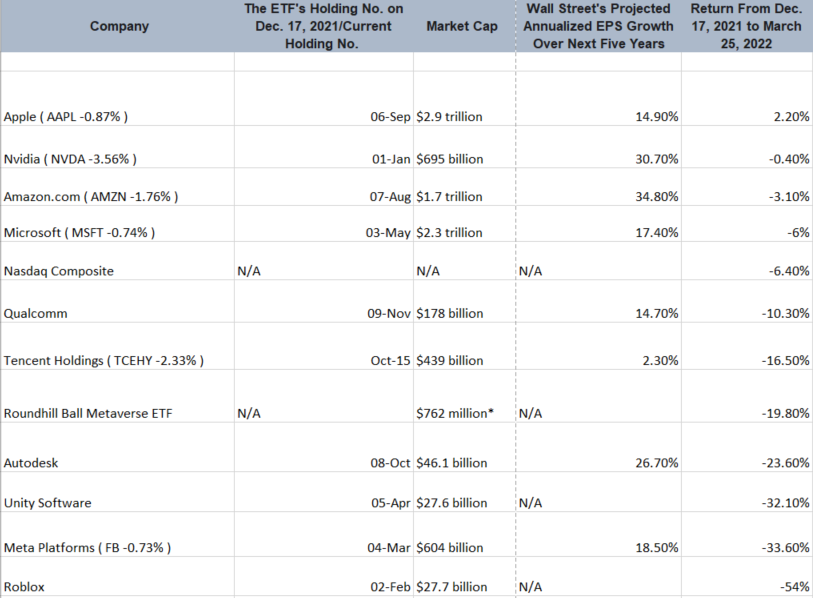
Nvidia Stocks Analysis
Nvidia investors should keep an eye on one major event on the horizon: chipmaker Intel’s (INTC 1.44 percent) long-awaited entry into Nvidia’s territory, a separate GPU for enthusiasts and artists. In the discrete GPU industry, Microelectronics Devices, or AMD, is now the No. 2 player (following Nvidia). One of Intel’s Arc-branded graphics processors for customers could be on sale as soon as this Wednesday, March 30. An online event will be held at 11 a.m. ET to show off the new processors.
What Is the Metaverse — and Why It Matters for Investors
Before diving into specific stocks, it’s essential to understand what the metaverse means in practical terms.
The metaverse isn’t a single product or platform — rather, it’s the next evolution of the internet: a persistent, immersive, interoperable digital space where users interact in real time across devices and environments. It blends gaming, social networking, digital commerce, remote work, entertainment, and more.
Key elements that define the metaverse include:
- Persistent digital worlds that exist even when users log off
- User‑generated content and economies
- Real‑time 3D rendering and social interaction
- Integration of AR/VR and spatial computing
Importantly, the metaverse will reshape multiple sectors, including gaming, social media, entertainment, enterprise collaboration, e‑commerce, and even manufacturing and logistics. For investors, this translates into diverse pathways to participate — from hardware providers to platform leaders, infrastructure companies to software developers.
Why Metaverse Stocks Are Still Worth Considering (Despite Slow Adoption)
The idea of the metaverse reached fever pitch several years ago, with companies like Meta Platforms spending tens of billions of dollars on VR/AR development. However, adoption hasn’t yet matched the hype.
Meta’s Reality Labs reported huge cumulative losses from VR/AR investments, and the company has begun shifting its strategy toward mobile platforms rather than pure VR experiences, reducing some of its metaverse ambitions while maintaining long‑term commitment to immersive technologies.
Even so, many analysts and investors believe that the metaverse will be a multi‑trillion‑dollar opportunity over time — but it will arrive gradually and through multiple technologies, not a sudden, singular launch event.
This means many metaverse stocks are compelling not just because of immersive virtual worlds, but because they enable the infrastructure, hardware, software, and user experiences that will power digital economies of the future.
Top Metaverse Stocks to Buy in 2026
Below are some of the most frequently cited metaverse‑related stocks worth considering, grouped by their roles in building the metaverse ecosystem.
1. Meta Platforms — Virtual Worlds and Social Platforms
Meta Platforms (formerly Facebook) is arguably the most well‑known metaverse investor. The company has invested tens of billions of dollars into virtual reality hardware (Oculus/Quest), AR projects, and metaverse concepts under its Reality Labs division, making it central to the future of immersive social spaces.
Meta’s flagship social platforms (Facebook, Instagram, WhatsApp) provide massive user bases and monetization engines that fund long‑term innovation. The shift toward mobile metaverse experiences — away from VR‑only — reflects an effort to make metaverse elements accessible to billions of users without specialized headsets.
Why Meta is a top metaverse stock:
- Largest investment in VR/AR development globally
- Massive social ecosystem and data infrastructure
- Pivot to broader mobile accessibility signals pragmatism
- Still part of “Magnificent Seven” tech leaders shaping digital transformation
Meta’s journey shows that metaverse investments can be a long game — but its scale, cash flow generation, and strategic breadth keep it a foundational play.
2. Nvidia — AI, Graphics, and Computing Power
Nvidia is one of the most critical companies in the metaverse narrative — not as a metaverse platform itself, but as the technology backbone that makes high‑quality graphics, real‑time rendering, artificial intelligence, and complex simulations possible.
Nvidia’s GPUs (graphics processing units) power gaming, 3D modeling, virtual production, and increasingly — machine learning and AI systems that will be essential for immersive environments. It also offers the Omniverse platform, a simulation and collaboration environment designed for real‑time 3D workflows across industries.
Moreover, Nvidia’s strategic partnership with Meta underlines its importance to metaverse development and expanding AI infrastructure.
Why Nvidia belongs on the list:
- GPUs and AI hardware are foundational to metaverse rendering
- Graphics technology is central to immersive experiences
- Broad adoption across gaming, cloud computing, and enterprise segments
Nvidia exemplifies the kind of essential infrastructure provider that benefits whether or not the metaverse looks like early hype suggested.
3. Roblox — User‑Generated Virtual Worlds
Roblox has already become a global interactive platform where users create, socialize, and play in virtual worlds — experiences many view as precursors to the metaverse itself. Its user‑generated content model has made it a digital destination for millions of players and creators.
Even though Roblox isn’t a full “metaverse” yet, its massive daily active user base, development ecosystem, and ability to host events, economies, and 3D interactions position it as one of the closest real‑world models we currently have.
Reasons Roblox makes the list:
- Creator‑driven digital worlds with social economies
- Large, engaged audience across multiple demographics
- Ongoing expansion into global markets
Roblox reflects how early metaverse adoption may center less on hardware and more on platforms where users build and interact in shared environments.
4. Unity Software — 3D Content and Development Tools
Unity is one of the leading 3D development engines in the world, widely used in gaming and increasingly for real‑time interactive applications — including AR/VR and potential metaverse experiences.
Unity’s platform enables developers to build immersive environments, 3D simulations, and cross‑platform experiences that are expected to be central to metaverse creation. Its accessibility for indie developers and large studios alike makes it a critical bridge between creators and consumers in virtual ecosystems.
Why Unity is relevant:
- Dominant 3D engine for gaming and AR/VR development
- Strong community of developers creating immersive content
- Positioned to benefit from the growth of real‑time graphics
Unity’s role in powering future experiences — regardless of specific metaverse definitions — makes it a strategic investment for exposure to 3D digital creation.
5. Cloudflare — Connectivity and Infrastructure
While not typically a “metaverse” name on the surface, Cloudflare plays an important role in the broader landscape by providing internet infrastructure, content delivery, security, and performance services.
Web‑scale virtual environments — especially those supporting real‑time interactions — require fast, secure, and resilient networks. Cloudflare supports these needs at scale, and its investments in Web3 and decentralized technologies align with future iterations of digital ecosystems.
Key reasons to consider Cloudflare:
- Critical internet infrastructure and security services
- Enhances performance for real‑time applications
- Support for blockchain/Web3 frameworks
Cloudflare is an example of a supporting pillar of metaverse infrastructure, enabling experiences that require seamless data flow and secure connectivity.
6. Other Notable Metaverse Stocks and Themes
Beyond the core companies listed above, several other public companies play supporting roles in the metaverse ecosystem and are worth understanding:
Semiconductors and Hardware Providers
- Advanced Micro Devices (AMD): Competes in GPU and CPU markets that power gaming, AI, and visualization — all essential for metaverse experiences.
- Qualcomm: Its processors power mobile and XR devices that could serve as metaverse entry points.
Enterprise 3D and Design Software
- Adobe: Tools for 3D design and digital media creation that support immersive content.
- Dassault Systèmes & PTC: Companies focused on digital twin and industrial simulation software — a hidden but potentially lucrative aspect of the metaverse in manufacturing and engineering.
Gaming and Digital Economies
- Electronic Arts (EA), Take‑Two Interactive (TTWO), NetEase: Developers of rich gaming worlds that resemble early forms of metaverse environments.
- Snap (SNAP): Augmented reality innovations that enhance digital interactions.
Metaverse ETFs
If selecting individual stocks feels too specific or risky, metaverse‑focused exchange‑traded funds (ETFs) such as the Roundhill Ball Metaverse ETF offer diversified exposure to many of the above companies in one investment vehicle.
How to Evaluate Metaverse Stocks
Investing in metaverse stocks isn’t as simple as selecting names with “VR” in their mission statement. Savvy investors consider a range of factors:
1. Fundamental Business Strength
Look for companies with strong balance sheets, solid revenue streams, and business models that can weather slow adoption cycles — especially since the metaverse is still emerging.
2. Role Within the Metaverse Ecosystem
Different companies benefit in different ways:
- Hardware providers
- Platform and social experiences
- Content creation tools
- Connectivity infrastructure
Diversify across these categories rather than concentrating in one.
3. Competitive Moat and Innovation
Does the company have a technological advantage, large user base, or unique ecosystem stickiness? Strong moats increase the likelihood of long‑term success.
4. Adoption Trends and Real‑World Usage
User engagement, corporate partnerships, and real‑world adoption signals are key leading indicators of future growth, especially for platforms like Roblox or Unity.
Risks to Investing in Metaverse Stocks
Like any big thematic trend, metaverse investments come with risks:
Slow Adoption
Despite long‑term potential, the metaverse may take years to reach mainstream usage — testing investor patience.
High R&D Spending
Companies investing heavily (e.g., Meta’s Reality Labs) can face prolonged losses before profitability emerges.
Technological Fragmentation
There’s no single “walled garden” metaverse — different ecosystems may evolve, reducing network effects.
Valuation Volatility
Stocks tied to new technologies often trade at premium valuations, amplifying risk when growth slows.
Conclusion: A Long‑Term View on Metaverse Investing
Metaverse stocks are not short‑term bets — they are strategic positions in the future of digital interaction, AI computing, immersive media, and virtual economies. Companies like Meta Platforms, Nvidia, Roblox, Unity, and Cloudflare represent diverse pathways into this theme, from immersive platforms to foundational infrastructure.
Successful investing in the metaverse requires patience, careful stock selection, diversification, and an eye toward long‑term transformation rather than immediate returns. At its core, the metaverse is not one product — it’s an evolving digital frontier.
Investors who understand these dynamics and select stocks with resilient fundamentals and strategic metaverse exposure will be better positioned to capture growth as the virtual world unfolds.
Frequently Asked Questions About Metaverse Stocks
1. What exactly makes a company a “metaverse stock”?
A metaverse stock is a company that stands to benefit from the development of digital worlds and immersive experiences — either through hardware, software, platforms, or infrastructure.
2. Should I buy metaverse stocks now or wait?
Long‑term investors often use dollar‑cost averaging and focus on fundamental value, as the metaverse trend is still emerging and adoption is uneven.
3. Are metaverse ETFs a good alternative to individual stocks?
Yes — ETFs provide diversified exposure across multiple metaverse‑related companies, reducing company‑specific risk.
4. Will VR and AR hardware be essential for the metaverse?
Hardware is important, but many metaverse experiences will be accessible through mobile and cloud platforms without specialized devices.
5. How do AI and cloud computing relate to the metaverse?
AI and cloud infrastructure are key enablers of large‑scale virtual environments, real‑time rendering, personalization, and immersive experiences.