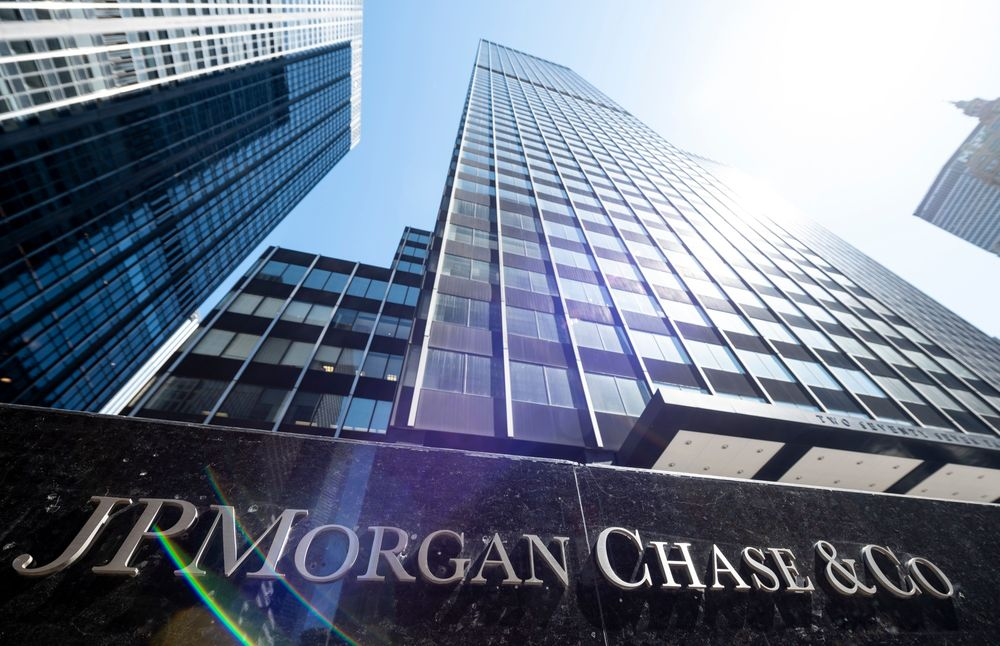
JPMorgan Chase & Co. (NYSE: JPM), the largest bank in the United States by assets, experienced its sharpest single-day decline since early April 2025, falling nearly 5% and becoming the biggest loser in the Dow Jones Industrial Average. The dramatic sell-off was triggered by a confluence of factors: mounting concerns over the U.S. budget deficit, signals of more cautious share repurchase activity, and increasingly pessimistic economic forecasts from CEO Jamie Dimon.
The stock’s tumble underscores growing unease among investors about the trajectory of both the U.S. economy and the banking sector’s profitability outlook. With Dimon warning of potential stagflation, market corrections, and deteriorating economic conditions, market participants are reassessing their positions in America’s banking giant.
For traders and investors navigating these turbulent waters, understanding the underlying factors driving JPMorgan’s decline is essential. Whether you’re trading through established forex brokers or considering positions in banking stocks, the implications of these developments extend far beyond a single stock.
Broker Review Contents
The December 2025 Stock Decline: What Happened?
Higher Expenses Shock the Market
On December 9, 2025, JPMorgan shares plunged after Marianne Lake, CEO of the bank’s Consumer and Community Banking division, delivered sobering news at a Goldman Sachs conference in New York. Lake announced that JPMorgan anticipates spending $105 billion in 2026, significantly exceeding analyst expectations of approximately $100 billion.
| Factor | Details |
|---|---|
| Stock Decline | Nearly 5% in single session |
| 2025 YTD Expenses | $96 billion through Q3 |
| 2026 Expense Forecast | $105 billion |
| Analyst Expectations | ~$100 billion |
| Variance | +$5 billion above expectations |
| Dow Impact | Biggest loser in DJIA |
The expense increase will be driven by several factors:
- Volume and growth-related expenses including compensation and credit card marketing
- Strategic investments in brick-and-mortar branches and artificial intelligence
- Structural consequences of inflation affecting operational costs
Lake characterized the current economic environment as “a little bit more fragile,” noting that JPMorgan expects unemployment to “grind a little higher” next year. This cautious assessment contrasts sharply with the bank’s otherwise strong performance in 2025.
Consumer Credit Concerns
Adding to investor concerns, JPMorgan signaled expectations for rising credit card charge-offs. While the bank recently lowered its 2025 charge-off expectations to 3.3%, it projects this rate will climb to 3.6% or higher in 2026 as pandemic-era savings continue to deplete.
| Credit Metric | 2025 Projection | 2026 Projection |
|---|---|---|
| Card Charge-off Rate | 3.3% | 3.6%+ |
| Consumer Health | “Still resilient” | “More fragile” |
| Deposit Growth | Moderate | Slower expected |
For traders monitoring financial sector movements through CFD trading platforms, these credit quality indicators provide important signals about consumer financial health and banking sector profitability.
U.S. Budget Deficit: The Elephant in the Room
“Going Broke Slowly”
One of the most significant factors weighing on JPMorgan and financial markets broadly is the ballooning U.S. federal deficit. JPMorgan’s own analysts have characterized America’s fiscal trajectory as “going broke slowly,” a phrase that captures the gradual but relentless accumulation of government debt.
According to J.P. Morgan Asset Management’s analysis:
| Fiscal Metric | Current Status |
|---|---|
| Federal Debt (Public) | ~$30.3 trillion |
| Debt-to-GDP Ratio | 99.9% |
| FY2025 Deficit | $1.809 trillion (6.0% of GDP) |
| Adjusted FY2025 Deficit | $2.043 trillion (6.7% of GDP) |
| Projected FY2026 Debt-to-GDP | 102.2% |
| National Debt (Total) | $37.8+ trillion |
| Annual Interest Payments | $1.2 trillion |
Jamie Dimon has repeatedly expressed concern about the fiscal situation. “Global fiscal deficits are inflationary,” Dimon told Bloomberg Television. “I think the remilitarization of the world is inflationary.”
Impact on Bond Markets and Banking
The deficit concerns have direct implications for banks like JPMorgan:
- Higher Interest Rates: Persistent deficits may keep interest rates elevated, affecting loan demand and mortgage activity
- Treasury Market Volatility: Questions about foreign demand for U.S. Treasuries could increase bond market instability
- Credit Quality: Economic stress from fiscal tightening could accelerate loan defaults
- Regulatory Capital: Higher yields affect mark-to-market valuations of bank bond portfolios
Dimon has warned that excessive government spending and quantitative easing will eventually cause a “kerfuffle” in the Treasury market, potentially requiring Federal Reserve intervention.
For investors seeking to diversify across asset classes, understanding these macroeconomic dynamics is crucial. Many traders use regulated forex platforms to hedge currency exposure arising from fiscal uncertainty.
Share Repurchase Program: Cautious Capital Deployment
The $50 Billion Buyback Authorization
In July 2025, JPMorgan announced a new $50 billion share repurchase program, effective immediately. This authorization followed the bank’s strong performance in the Federal Reserve’s 2025 stress test and represented a significant capital return commitment to shareholders.
| Buyback Program Details | Information |
|---|---|
| Authorization Amount | $50 billion |
| Effective Date | July 1, 2025 |
| Q2 2025 Buybacks | $7.506 billion |
| Q1 2025 Buybacks | $7.528 billion |
| YoY Change (Q2) | +40.67% |
| 2024 Annual Buybacks | $18.83 billion |
Jamie Dimon stated: “The new share repurchase program provides the ability to distribute capital to our shareholders over time, as we see fit.”
Signaling More Conservative Approach
However, recent communications suggest JPMorgan is taking a more measured approach to share repurchases. At the bank’s investor day, management indicated that buybacks remain “at the bottom of the priority list” for capital deployment, with the bank preferring to:
- Invest in organic growth opportunities
- Maintain fortress balance sheet strength
- Fund strategic acquisitions when attractive
- Build reserves for potential economic downturns
This conservative stance reflects Dimon’s broader concerns about market valuations and economic risks. With the bank accumulating significant excess capital (representing approximately 10% of market capitalization), the decision to prioritize preservation over distribution signals management’s cautious outlook.
The shift in capital allocation priorities has disappointed some investors who anticipated more aggressive buyback activity given the bank’s strong profitability.
Jamie Dimon’s Pessimistic Economic Forecast
“I’m Far More Worried Than Others”
Jamie Dimon, who has led JPMorgan since 2006, has established himself as one of Wall Street’s most influential voices on economic matters. Throughout 2025, his warnings have grown increasingly urgent and pessimistic.
In October 2025, Dimon told the BBC: “I am far more worried about that than others,” referring to the risk of a significant stock market correction within six months to two years.
Key Warnings from Jamie Dimon in 2025
| Date | Warning | Key Quote |
|---|---|---|
| March 2025 | Inflation concerns | “It’s all inflationary” |
| April 2025 | Recession likely | “Recession is probably a likely outcome” |
| May 2025 | Stagflation risk | “Chance of stagflation is higher than people think” |
| June 2025 | Economic deterioration | “Real numbers will deteriorate soon” |
| October 2025 | Market correction | “30% chance of serious correction” |
| December 2025 | Fragile environment | Economy is “a little bit more fragile” |
Stagflation: The Nightmare Scenario
Dimon has repeatedly warned about the possibility of stagflation, the toxic combination of economic stagnation and persistent inflation that plagued the U.S. in the 1970s.
“There’s a chance that we’ll have stagflation in the U.S.,” Dimon told Bloomberg Television in Shanghai. He emphasized that while not making a prediction, “we have to be prepared for something like that.”
The factors Dimon cites as inflationary include:
- Government budget deficits at unsustainable levels
- Remilitarization of the global economy
- Trade wars and tariffs disrupting supply chains
- Energy transition costs adding to inflation
- Labor market pressures from reduced immigration
Market Complacency
Dimon has criticized what he sees as excessive optimism in financial markets. After stocks recovered from tariff-related declines earlier in 2025, he observed: “The market came down 10%, it’s back up 10%; I think that’s an extraordinary amount of complacency.”
He believes investors are not adequately pricing in risks from:
- Geopolitical tensions (particularly U.S.-China relations)
- Elevated valuations approaching dot-com era levels
- Potential for Federal Reserve policy errors
- Credit market stress in private lending
For traders using stock trading platforms, Dimon’s warnings provide important context for risk management decisions.
Geopolitical Risks and Global Uncertainty
“The Most Dangerous Since World War II”
Dimon has described the current geopolitical environment as “the most dangerous and complicated since World War II.” His concerns extend beyond economics to fundamental questions about global stability.
“People talk about stockpiling things like crypto,” Dimon told the BBC. “I always say we should be stockpiling bullets, guns and bombs. The world’s a much more dangerous place, and I’d rather have safety than not.”
Key Geopolitical Concerns
| Risk Factor | Dimon’s Assessment |
|---|---|
| U.S.-China Relations | Deeply concerning; trade tensions persist |
| Ukraine Conflict | Ongoing uncertainty affecting energy and commodities |
| Middle East Tensions | Contributing to oil price volatility |
| NATO/EU Stability | Adversaries seeking bilateral world order |
| Global Remilitarization | Inflationary and resource-intensive |
Dimon emphasized the need for U.S. leadership: “I’m not against ‘America First,’ but we cannot be ‘America alone.'”
Implications for Investors
These geopolitical risks have several investment implications:
- Currency volatility may increase, benefiting forex traders with proper risk management
- Commodity exposure becomes important for portfolio diversification
- Safe-haven assets like gold may see increased demand
- Emerging market investments require careful country-risk analysis
AI Investment: A Bright Spot Amid Concerns
JPMorgan’s Technology Push
Despite his pessimism about the broader economy, Dimon remains bullish on artificial intelligence and its potential to transform banking. JPMorgan is investing heavily in AI, with the bank:
- Spending approximately $18 billion annually on technology
- Deploying roughly 50 AI use cases currently
- Expecting to expand to 1,000+ use cases within a year
- Integrating AI across all business lines
“The way I look at it is AI is real, AI in total will pay off,” Dimon stated. “Just like cars in total paid off, and TVs in total paid off, but most people involved in them didn’t do well.”
The AI Investment Warning
While positive on AI’s long-term potential, Dimon cautions that not all AI investments will succeed. He draws parallels to previous technology revolutions where the transformative technology generated wealth overall, but many individual companies and investors lost money.
| AI Investment Outlook | JPMorgan’s View |
|---|---|
| Long-term potential | Very positive |
| Short-term winners | Selective |
| Investment losses | “Some will probably be lost” |
| Business transformation | “Every single job” affected |
| Strategic priority | Top-tier |
This nuanced view suggests investors should be selective in AI-related investments rather than chasing the sector broadly.
What This Means for Investors and Traders
Key Takeaways for Market Participants
The convergence of factors affecting JPMorgan provides important lessons for investors:
For Stock Investors:
- Banking sector faces margin pressure from higher expenses
- Credit quality deterioration expected in 2026
- Conservative capital deployment may limit shareholder returns
- Valuation re-rating possible if pessimistic forecasts materialize
For Forex Traders:
- U.S. fiscal concerns could weaken dollar long-term
- Rate differential plays may be affected by Fed policy uncertainty
- Safe-haven flows may benefit certain currency pairs
- Volatility likely to increase around economic data releases
For Fixed Income Investors:
- Treasury market volatility expected to continue
- Credit spreads may widen as economic conditions soften
- Duration risk elevated given fiscal uncertainty
- Corporate bond selection increasingly important
Portfolio Considerations
| Strategy | Rationale |
|---|---|
| Diversification | Reduce concentration in U.S. banking sector |
| Quality Focus | Favor companies with strong balance sheets |
| Liquidity | Maintain cash reserves for opportunities |
| Hedging | Consider protective positions for equity exposure |
| International Exposure | Diversify geographic concentration |
For traders looking to implement these strategies, choosing the right trading platform with appropriate tools and reasonable costs is essential.
Historical Context: Dimon’s Track Record
The Cautious CEO
Jamie Dimon has a well-established pattern of warning about economic risks, even during periods of strong performance. This tendency raises questions about whether his current pessimism should be weighted differently.
| Period | Dimon’s Warning | Outcome |
|---|---|---|
| 2022 | “Hurricane” hitting economy | Soft landing achieved |
| 2023 | Recession concerns | Growth continued |
| 2024 | Stagflation worst case | Inflation moderated |
| 2025 | Market correction, recession | TBD |
However, his track record isn’t entirely pessimistic misses. JPMorgan’s conservative positioning has helped it:
- Navigate the 2008 financial crisis successfully
- Acquire failed competitors (Bear Stearns, Washington Mutual, First Republic)
- Generate seven record annual profits from 2015-2024
- Maintain industry-leading returns on equity
As Dimon himself noted: “Almost every major financial company in the world almost didn’t make it” during past crises, while those that earned high returns in preceding years often failed.
Looking Ahead: What to Watch
Key Events and Indicators
Investors should monitor several factors in coming months:
| Indicator | Significance |
|---|---|
| Q4 2025 Earnings | Expense trends and credit quality |
| Fed Rate Decisions | Impact on net interest margins |
| Inflation Data | Stagflation risk assessment |
| Employment Reports | Consumer credit implications |
| Tariff Developments | Trade war economic impact |
| Treasury Auctions | Foreign demand for U.S. debt |
JPMorgan’s Investment Banking Outlook
Despite consumer banking concerns, Lake provided some positive signals:
- Investment banking fees expected to rise “low single digits” in Q4
- Markets business projected to increase by “low teens” year-over-year
- Strong deal pipeline if economic conditions stabilize
Conclusion: Navigating Uncertainty
JPMorgan’s sharp decline reflects broader anxieties about the U.S. economy, fiscal sustainability, and banking sector profitability. Jamie Dimon’s increasingly pessimistic warnings, combined with signals of more conservative capital deployment and rising expenses, have forced investors to reassess the outlook for America’s largest bank.
While JPMorgan remains fundamentally strong with a “fortress balance sheet,” the near-term challenges are significant:
- Rising expenses will pressure profitability
- Credit deterioration appears likely in 2026
- Fiscal concerns create macroeconomic headwinds
- Geopolitical risks add uncertainty
- Market complacency may lead to corrections
For investors and traders, the key is maintaining disciplined risk management while staying alert to opportunities that volatility creates. Whether trading currencies through reputable forex brokers, investing in banking stocks, or positioning portfolios for economic uncertainty, understanding the factors driving JPMorgan’s decline is essential for informed decision-making.
As Dimon himself advises, preparation for adverse scenarios is prudent even if optimistic outcomes materialize. The current environment demands vigilance, diversification, and a clear-eyed assessment of both risks and opportunities.
Frequently Asked Questions
Why did JPMorgan stock fall in December 2025?
JPMorgan stock fell nearly 5% on December 9, 2025, after the bank announced expected 2026 expenses of $105 billion, significantly higher than analyst expectations of $100 billion. This was combined with warnings about a more fragile economic environment and rising credit card charge-offs.
What is Jamie Dimon’s economic outlook?
Jamie Dimon has expressed significant concern about the U.S. economy throughout 2025, warning about potential stagflation, market corrections, and economic deterioration. He believes markets are displaying “extraordinary complacency” regarding risks from deficits, tariffs, and geopolitical tensions.
Is JPMorgan still buying back shares?
JPMorgan has a $50 billion share repurchase authorization effective from July 2025. However, the bank has indicated that buybacks are “at the bottom of the priority list” for capital deployment, suggesting a more conservative approach to repurchases given economic uncertainties.
How does the U.S. budget deficit affect JPMorgan?
The growing U.S. budget deficit (approximately $2 trillion annually) creates several challenges for JPMorgan: potential inflation pressure affecting interest rate policies, Treasury market volatility impacting bond portfolios, and broader economic stress that could affect loan quality and consumer spending.
What is stagflation and why is Dimon worried about it?
Stagflation refers to a combination of economic stagnation (slow or negative growth) with persistent inflation. Dimon considers stagflation a “nightmare scenario” because it’s difficult for central banks to address, requiring opposite policy responses for its two components. He estimates the risk is “twice what others have projected.”
Should investors be concerned about JPMorgan?
While JPMorgan faces near-term headwinds, it remains the largest and one of the most profitable U.S. banks with strong capital ratios and diversified revenue streams. Investors should consider the higher expense outlook and credit concerns but also recognize the bank’s historical resilience through economic cycles.