Analysis of Growth Stocks: Top Metrics, Sectors & Investment Strategies for 2026
Investing in growing stocks has long been a cornerstone strategy for wealth creation. Unlike dividend-focused or value stocks, growth stocks focus on capital appreciation, driven by companies that demonstrate consistent revenue expansion, innovative products, and market disruption potential.
As 2026 unfolds, understanding which growth stocks to invest in, evaluating their risk-reward profiles, and identifying the macro and sectoral trends that fuel their growth is more critical than ever. This guide provides a comprehensive analysis, covering metrics, sectors, risks, and strategies for investors interested in high-potential stocks.

Broker Review Contents
Popular growth stocks in the market
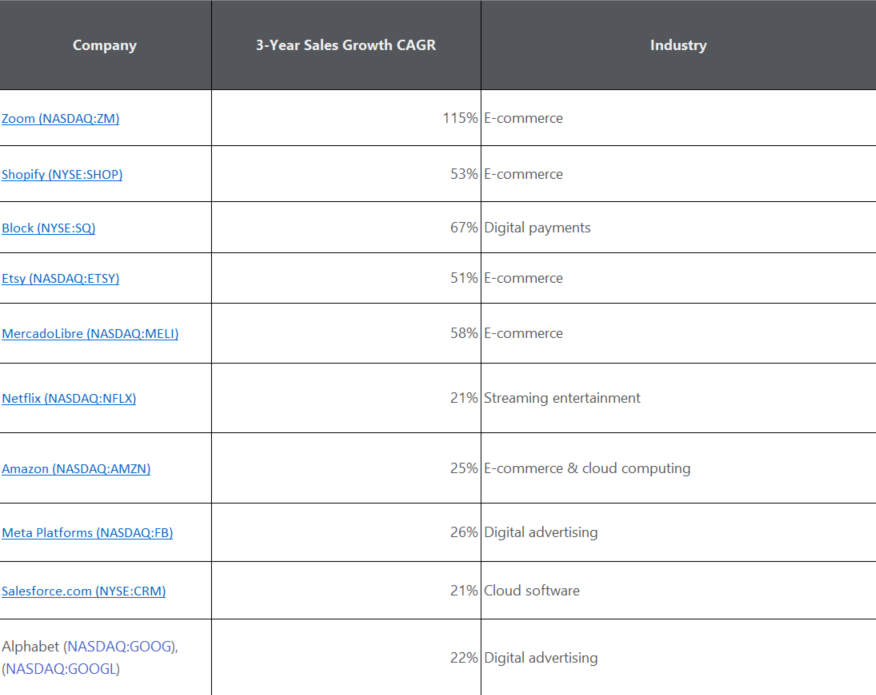
The list of all the popular growing stocks described below in the diagram:
Where can you look for growth stocks?
It’s possible for companies to make money over a long period of time by taking advantage of long-term trends. This could lead to more sales and profits, which would make money for their investors. Many changes which were already firmly advanced were amplified by the COVID-19 pandemic. Here are some instances, as well as firms that may assist you in capitalizing on these trends.
Trends and the firms that are driving growth stocks
Internet marketing: Meta and Google control the majority of the online ad business. They are positioned to earn financially as advertising money migrates from TV and printed to digital sites.
By enabling companies and organisations to process debit and credit card transactions, Block (previously Square) is helping to speed the worldwide move from currency to online methods of money.
During the epidemic, remote work solutions were a necessity for many companies. According to studies, the flexible workplace pattern will continue long after the epidemic has passed, as businesses understand the financial and personnel advantages of work flexibility. Zoom, with its user-friendly, virtualized teleconference communication solutions, will greatly profit from this tendency.
1. What Are Growth Stocks?
Growth stocks are shares of companies expected to grow faster than the overall market. These firms typically reinvest profits to expand operations, develop new products, and capture market share, rather than distributing dividends to shareholders.
Key Characteristics of Growth Stocks:
- High revenue and earnings growth rates
- Strong competitive advantages or moats
- Reinventive product pipelines or disruptive technology
- Higher volatility than blue-chip or dividend-paying stocks
Growth stocks attract investors seeking capital gains, especially those with a long-term investment horizon and tolerance for market swings.
2. Key Metrics for Evaluating Growth Stocks
Investing in growth stocks requires understanding financial indicators that signal potential success. Important metrics include:
- Revenue Growth Rate: Year-over-year revenue growth indicates market demand and scalability.
- Earnings Per Share (EPS) Growth: EPS growth reflects profitability relative to outstanding shares.
- Price/Earnings Growth (PEG) Ratio: Adjusts P/E ratio for expected growth; PEG < 1 may indicate undervaluation.
- Return on Equity (ROE): Measures efficiency in using shareholders’ equity to generate profits.
- Free Cash Flow (FCF): Indicates the company’s ability to reinvest in growth or pay down debt.
These metrics, combined, provide a quantitative foundation for assessing growth potential.
3. Fundamental Analysis for Growth Stocks
Beyond metrics, fundamental analysis evaluates a company’s financial health and competitive positioning:
- Balance Sheet Strength: Low debt and strong liquidity reduce financial risk.
- Profitability Margins: Sustainable gross and net margins support long-term growth.
- Competitive Advantage: Market share, brand strength, or patents can protect growth.
- Management Effectiveness: Experienced leadership is critical for executing growth strategies.
Fundamental analysis helps investors differentiate between hype-driven stocks and companies with real long-term potential.
4. Growth Industries and Sectors to Watch
Certain sectors are historically associated with high growth potential:
- Technology & Artificial Intelligence (AI): Cloud computing, AI platforms, and semiconductors continue to drive market expansion.
- Healthcare & Biotech: Companies innovating in gene therapy, vaccines, and personalized medicine.
- Clean Energy & Renewables: Solar, wind, and battery technology leaders are positioned for long-term demand.
- Consumer Tech & Digital Services: E-commerce, streaming, and digital payment platforms thrive in a connected world.
Investing in these sectors allows exposure to trends shaping the economy and capturing megatrend growth.
5. Examples of High-Growth Stocks in 2026
While investment decisions should always be based on individual research, examples of notable growth stocks include:
- Tech Giants with AI Focus: Companies leveraging AI to enhance services or products.
- Healthcare Innovators: Biotech firms developing novel therapeutics.
- Renewable Energy Leaders: Firms scaling solar, wind, or battery solutions.
- E-Commerce & SaaS Platforms: Businesses with recurring revenue models and global reach.
Analyzing these companies involves studying revenue growth, market position, and expansion strategy rather than short-term price fluctuations.
6. The Role of Innovation and Disruption
Innovation drives growth stocks. Companies that invest in research and development (R&D) and introduce market-disruptive products often outperform:
- R&D Investment: Continuous innovation strengthens competitive advantage.
- Market Disruption: First-mover advantage in new technologies can capture significant market share.
- Adoption Curve: Rapid customer adoption supports long-term growth trajectory.
Investors should focus on companies whose innovations address unmet needs or emerging markets.
7. Growth Stocks vs Dividend Stocks
Growth and dividend stocks serve different investment goals:
- Growth Stocks: Prioritize capital gains, reinvest profits for expansion, and often have higher volatility.
- Dividend Stocks: Provide regular income, typically slower growth, and may be more stable during market downturns.
Choosing between them depends on investment horizon, risk tolerance, and income needs. Some investors balance both in diversified portfolios.
8. Risks of Investing in Growth Stocks
Growth stocks are not without risk. Key risks include:
- Valuation Risk: Stocks with high P/E ratios may be overpriced relative to earnings.
- Market Volatility: Growth stocks are sensitive to economic cycles.
- Competition & Disruption: Emerging competitors may erode market share.
- Macroeconomic Conditions: Interest rate hikes or recessions can impact investor sentiment.
Effective risk management involves portfolio diversification and careful entry points.
9. How to Build a Growth Stock Portfolio
A well-structured growth portfolio balances risk and reward:
- Diversification: Spread investments across sectors to mitigate risk.
- Rebalancing: Periodically adjust holdings to maintain desired exposure.
- Time Horizon: Long-term perspective reduces the impact of short-term volatility.
- Tools: Use financial analytics, screening tools, and market insights to identify high-potential opportunities.
Combining fundamental and technical analysis ensures more informed investment decisions.
10. Technical Analysis Tools for Growth Stocks
While growth investing is often fundamental-driven, technical analysis can assist with timing:
- Moving Averages: Identify trends and potential support/resistance levels.
- RSI & MACD: Assess momentum and overbought/oversold conditions.
- Volume Trends: Confirm the strength of price movements.
Technical insights help optimize entry and exit points, complementing long-term growth strategies.
11. Impact of Macroeconomic Factors on Growth Stocks
Growth stock performance is influenced by global economic conditions:
- Interest Rates: Lower rates favor growth stocks by reducing borrowing costs.
- Inflation: Higher inflation can erode earnings, making valuation critical.
- GDP Growth: Expanding economies support revenue growth.
- Global Trends: Technological adoption, policy incentives, and international demand affect sector performance.
Awareness of macro trends allows investors to align portfolio strategy with market cycles.
12. Growth Investing in Different Markets
Global exposure can enhance growth opportunities:
- U.S. Market: Technology and biotech dominance offer robust growth potential.
- Emerging Markets: Digital adoption, renewable energy, and e-commerce are strong growth drivers.
- International Diversification: Helps manage geopolitical and currency risks.
Investors should evaluate region-specific growth catalysts for optimal portfolio allocation.
13. Long-Term Trends Shaping Growth Investing
Key megatrends influencing growth stocks include:
- Artificial Intelligence & Automation: Driving efficiency and innovation across industries.
- Cloud Computing & Digital Transformation: Expanding SaaS and enterprise solutions.
- Green Energy Transition: Renewable energy adoption is creating new market leaders.
- Healthcare Innovation: Gene therapy, telemedicine, and biotechnology expansion.
Investors who focus on long-term secular growth trends often outperform short-term traders.
14. Case Studies of Successful Growth Stocks
Studying success stories highlights investment principles:
- Tech Unicorns: Companies that grew rapidly through innovation and scaling.
- Healthcare Breakthroughs: Biotech firms achieving major clinical milestones.
- Renewable Leaders: Firms successfully capitalizing on government incentives and consumer demand.
Case studies illustrate how execution, innovation, and market timing drive growth.
15. Frequently Asked Questions (FAQs)
- What qualifies as a growth stock?
A stock with above-average revenue and earnings growth compared to the market. - How do I find growing stocks?
Analyze revenue trends, earnings growth, PEG ratio, and industry potential. - Are growth stocks riskier than dividend stocks?
Generally yes, due to higher volatility and reliance on future growth. - When is the best time to buy growth stocks?
Long-term investors often focus on undervaluation and strong fundamentals rather than timing short-term price swings. - Can growth stocks provide income?
Some may offer small dividends, but capital appreciation is the primary return driver.
Conclusion
Growth stocks remain a key avenue for investors seeking capital appreciation, driven by innovation, sector expansion, and technological disruption. While they carry higher volatility and valuation risk, careful selection based on metrics, fundamental analysis, and macroeconomic awareness can help build a strong growth portfolio.
By focusing on high-growth sectors, evaluating financial health, managing risk, and considering long-term trends, investors can position themselves to benefit from the most promising growth opportunities in 2026 and beyond.



